

Uncategorized
Peptides in Skincare and Weight Loss Research: Why These Peptides Are Gaining Attention in 2026
Jul
Introduction: The Growing Interest in Peptides for Skincare and Weight Management
Peptides have become one of the most discussed subjects in biotechnology, cosmetic science, and metabolic research. In 2026, researchers continue exploring how peptide compounds interact with biological systems related to skin health, cellular communication, metabolism, and energy regulation.
The growing popularity of peptides stems from their ability to act as signaling molecules within the body. Scientists study peptides to better understand how they influence various biological pathways, including those associated with skin appearance, collagen production, cellular repair, appetite regulation, and metabolic processes.
As research advances, peptides are increasingly featured in skincare formulations and scientific studies focused on weight management. While peptide research continues to evolve, their versatility has made them a major topic within both cosmetic and biotechnology industries.
This article explores how peptides are commonly used in skincare research and weight loss studies, highlights popular peptide compounds, and discusses why interest in these areas continues to grow.
Understanding Peptides
What Are Peptides?
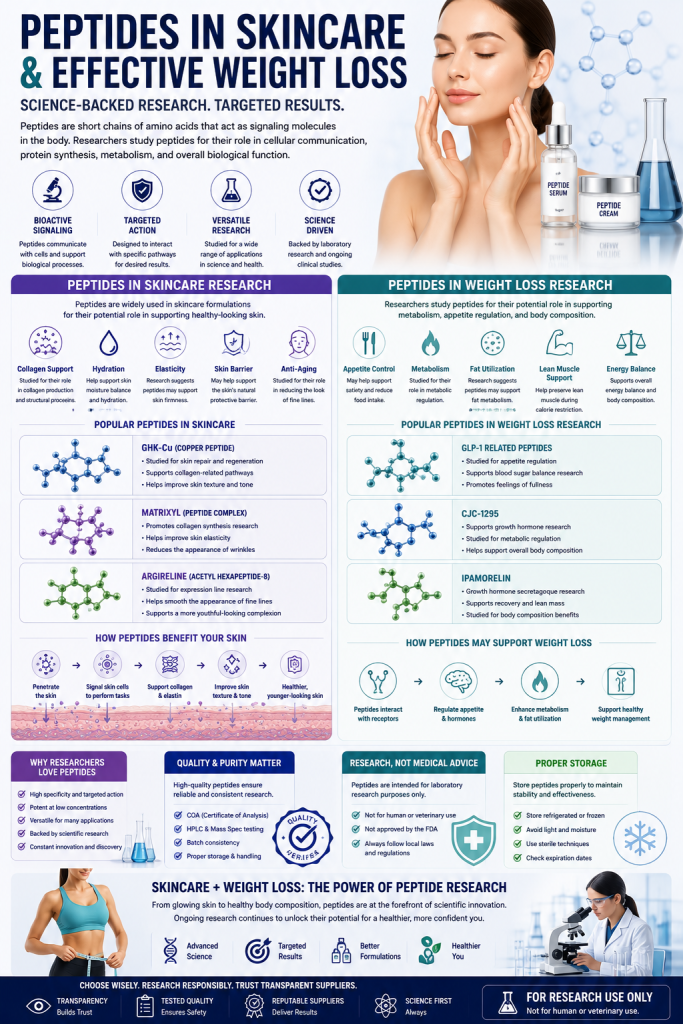
Peptides are short chains of amino acids that function as signaling molecules in biological systems. They help regulate communication between cells and play important roles in numerous physiological processes.
Researchers study peptides because they can interact with specific biological targets, making them useful tools for investigating:
- Cellular communication
- Structural protein pathways
- Metabolic regulation
- Tissue response mechanisms
- Skin-related biological processes
Their targeted nature makes peptides valuable in modern scientific research.
Peptides in Skincare Research
Why Peptides Are Used in Skincare
Peptides have become popular ingredients in modern skincare formulations because researchers study their role in skin-related cellular communication and structural protein pathways.
Scientists investigate peptides for their potential involvement in:
- Collagen-related pathways
- Skin hydration research
- Elasticity studies
- Skin barrier support
- Cosmetic anti-aging formulations
These research areas have contributed to the growing demand for peptide-based skincare products.
Collagen and Skin Structure Research
Collagen is one of the most important structural proteins associated with skin appearance and firmness.
Researchers study peptides to understand their interaction with collagen-related biological processes.
Common areas of investigation include:
- Skin firmness studies
- Elasticity research
- Structural protein analysis
- Skin texture investigations
Peptides such as GHK-Cu and Matrixyl are frequently discussed in collagen-focused skincare research.
Hydration and Skin Barrier Studies
Maintaining skin hydration is essential for healthy-looking skin.
Researchers explore how certain peptides may support:
- Moisture retention pathways
- Skin barrier function
- Surface hydration mechanisms
- Protective skin responses
These studies have influenced the development of peptide-containing moisturizers, serums, and cosmetic treatments.
Popular Skincare Peptides
GHK-Cu (Copper Peptide)
GHK-Cu is one of the most recognized peptides in cosmetic science.
Research commonly focuses on:
- Skin appearance studies
- Collagen-related pathways
- Skin texture analysis
- Structural protein research
Matrixyl
Matrixyl peptides are frequently used in anti-aging skincare formulations.
Researchers study Matrixyl for:
- Elasticity-related pathways
- Skin firmness research
- Cosmetic appearance studies
- Hydration-focused formulations
Argireline
Argireline is another peptide commonly discussed in skincare research.
Scientific investigations often involve:
- Surface appearance studies
- Cosmetic texture analysis
- Cellular communication pathways
- Anti-aging skincare formulations
Peptides in Weight Loss Research
Why Researchers Study Peptides and Metabolism
Weight management research is one of the fastest-growing areas in peptide science.
Researchers investigate how peptides interact with biological systems involved in:
- Appetite signaling
- Energy regulation
- Metabolic pathways
- Nutrient utilization
- Cellular energy processes
This growing field continues attracting attention from biotechnology companies and scientific institutions worldwide.
Metabolic Research and Peptides
Peptides are often studied because they may interact with signaling pathways that influence metabolic activity.
Researchers explore:
- Energy balance mechanisms
- Cellular metabolism
- Appetite-related biological systems
- Nutrient processing pathways
Understanding these interactions helps scientists better understand metabolic regulation.
Popular Peptides Discussed in Weight Loss Research
GLP-1 Related Peptides
GLP-1 receptor agonists remain among the most discussed compounds in metabolic research.
Researchers investigate them for their role in:
- Appetite regulation pathways
- Metabolic signaling systems
- Energy balance studies
- Nutrient response mechanisms
Interest in GLP-1-related research continues expanding globally.
CJC-1295
CJC-1295 is commonly studied in research involving growth-related biological signaling pathways.
Scientific investigations often focus on:
- Cellular communication
- Hormonal signaling
- Metabolic regulation
- Biological adaptation mechanisms
Ipamorelin
Ipamorelin is another peptide frequently discussed in metabolic and recovery-related research.
Researchers study:
- Signaling pathways
- Biological regulation systems
- Cellular communication processes
- Growth-related mechanisms
Why Peptide Research Is Expanding
Advances in Biotechnology
Modern biotechnology has significantly improved peptide synthesis and analysis.
These advances support:
- Higher purity products
- Better research consistency
- Improved analytical testing
- Enhanced manufacturing standards
As a result, peptide research continues expanding across multiple scientific disciplines.
Increased Demand for Science-Based Products
Consumers and researchers increasingly seek products and research supported by scientific evidence.
This demand has contributed to growing interest in:
- Peptide skincare formulations
- Metabolic research peptides
- Quality-controlled peptide products
- Transparent laboratory testing
Importance of Quality and Transparency
Why Quality Matters
Researchers emphasize peptide quality because product purity can significantly influence research outcomes.
Trusted suppliers typically provide:
- Certificates of Analysis (COAs)
- HPLC testing reports
- Mass Spectrometry verification
- Batch tracking documentation
Learn more in our guide on supplier transparency and COA tested peptides.
Storage and Stability Considerations
Proper storage is essential for maintaining peptide integrity.
Laboratories commonly focus on:
- Temperature control
- Moisture protection
- Secure packaging
- Stability monitoring
These practices help preserve product quality throughout research projects.
The Future of Peptides in Skincare and Weight Management Research
Continued Scientific Innovation
Researchers expect peptide science to continue expanding due to advances in:
- Molecular biology
- Biotechnology
- Artificial intelligence
- Analytical chemistry
These technologies are helping scientists better understand peptide interactions and biological pathways.
Growing Market Demand
Both skincare and metabolic research sectors continue investing heavily in peptide-related innovation.
Future developments may include:
- Advanced peptide formulations
- Improved delivery systems
- Enhanced quality standards
- More personalized research applications
Frequently Asked Questions (FAQ)
What are peptides used for in skincare?
Researchers study peptides for collagen-related pathways, hydration support, elasticity research, and skin barrier investigations.
What are the most popular skincare peptides?
Commonly discussed skincare peptides include GHK-Cu, Matrixyl, and Argireline.
Why are peptides studied in weight loss research?
Researchers investigate peptides for their involvement in metabolic regulation, appetite signaling, and energy-related biological pathways
What are GLP-1 related peptides?
GLP-1-related compounds are widely researched for their interaction with metabolic and appetite-regulation pathways.
Why is peptide quality important?
High-quality peptides help improve research consistency, reliability, and scientific accuracy.
