

Uncategorized
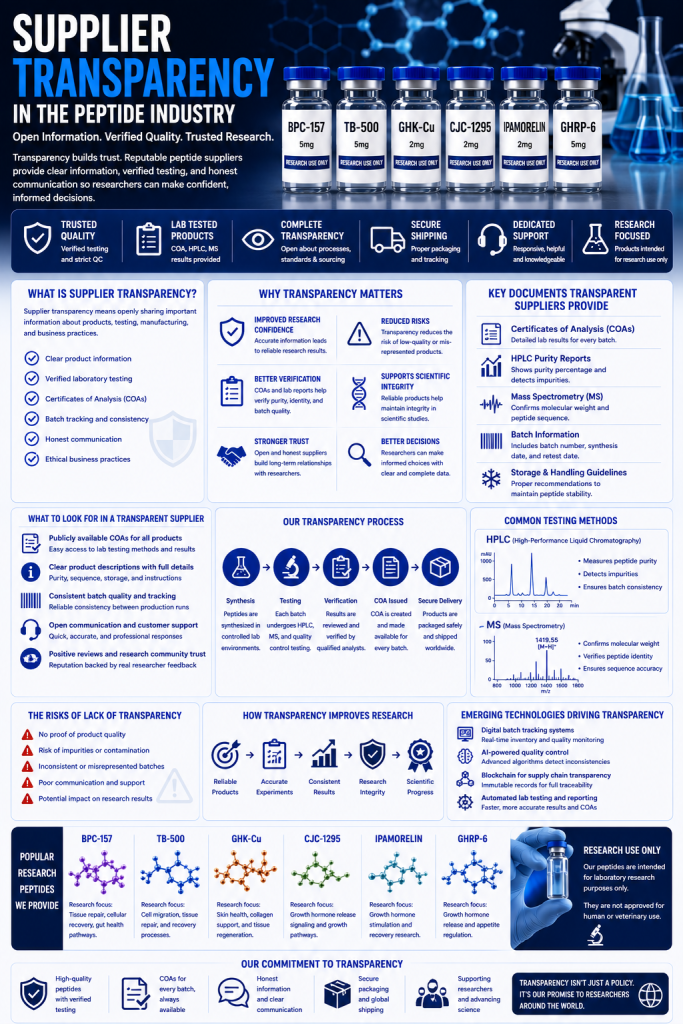
Supplier Transparency in the Peptide Industry: Why It Matters for Research Quality and Trust
Jul
Introduction: The Growing Importance of Transparency in the Peptide Market
The global peptide industry has expanded rapidly over the past few years, driven by increasing interest in biotechnology, molecular science, and laboratory research. As demand grows, researchers are becoming more selective about the suppliers they choose.
In 2026, supplier transparency has become one of the most important factors influencing purchasing decisions in the peptide market. Researchers, laboratories, and biotechnology companies now expect clear communication, verified product testing, and open quality control practices from peptide suppliers.
Transparency helps researchers better evaluate product quality, understand manufacturing standards, and improve confidence in laboratory outcomes. In a market filled with many online suppliers, transparent companies are more likely to build long-term trust and strong reputations.
This article explores why supplier transparency matters in peptide research, what researchers look for in transparent suppliers, and how openness improves quality, consistency, and scientific reliability.
What Is Supplier Transparency?
Understanding Transparency in the Peptide Industry
Supplier transparency refers to how openly a peptide company shares information about its products, testing procedures, quality standards, and business practices.
Transparent peptide suppliers often provide:
- Certificates of Analysis (COAs)
- Laboratory testing reports
- Product purity information
- Batch verification details
- Storage recommendations
- Clear customer support communication
This openness helps researchers make informed decisions before purchasing products.
Why Transparency Is Becoming More Important
As the peptide industry grows, researchers are increasingly concerned about:
- Product quality
- Manufacturing consistency
- Reliable laboratory testing
- Ethical research standards
- Accurate product information
Transparency helps address these concerns and supports stronger confidence in research materials.
Why Researchers Value Transparent Peptide Suppliers
Improved Research Confidence
Transparent suppliers provide researchers with verified information that supports confidence in laboratory studies.
When suppliers openly share testing data and quality standards, researchers can better evaluate:
- Product consistency
- Purity levels
- Research reliability
- Batch stability
Reliable data helps improve reproducibility in scientific research.
Better Product Verification
One of the biggest advantages of supplier transparency is easier product verification.
Researchers commonly review:
- HPLC reports
- Mass Spectrometry results
- Batch tracking systems
- Certificates of Analysis
These documents help confirm peptide identity and quality.
You can also explore our guide on COA tested peptides to learn more about laboratory verification practices.
Stronger Long-Term Trust
Researchers often build long-term relationships with suppliers that consistently provide transparent information and professional communication.
Trust is especially important for:
- Ongoing laboratory projects
- Large research studies
- Repeat peptide orders
- Consistent batch sourcing
Transparent companies are more likely to develop strong industry reputations over time.
Key Features of Transparent Peptide Suppliers
Certificates of Analysis (COAs)
A COA is one of the most important indicators of transparency in the peptide industry.
Professional COAs usually include:
- Product identification
- Purity percentages
- Analytical testing results
- Batch numbers
- Date of analysis
Researchers rely heavily on these documents to verify product quality.
Laboratory Testing Transparency
Trusted suppliers openly discuss the testing methods used to verify peptide quality.
Common testing methods include:
- High-Performance Liquid Chromatography (HPLC)
- Mass Spectrometry (MS)
- Stability analysis
- Batch consistency testing
Clear testing information helps researchers better evaluate research materials.
Detailed Product Information
Transparent peptide companies typically provide detailed product pages with information about:
- Purity levels
- Storage conditions
- Handling recommendations
- Product specifications
This level of detail supports professional laboratory use.
Responsive Customer Support
Good communication is another important part of transparency.
Researchers value suppliers that provide:
- Fast response times
- Clear answers to technical questions
- Shipping updates
- Order tracking information
Strong customer support improves the overall research purchasing experience.
How Transparency Improves Research Quality
Reducing Experimental Variability
High-quality peptides supported by transparent testing help reduce variability in scientific experiments.
Researchers depend on consistent products to achieve:
- Reliable laboratory results
- Better reproducibility
- Improved data accuracy
- Stable long-term studies
Supporting Scientific Integrity
Transparency plays an important role in maintaining scientific integrity.
Researchers are more likely to trust suppliers that openly share:
- Quality control processes
- Analytical verification data
- Manufacturing standards
- Product sourcing information
This openness helps strengthen confidence across the scientific community.
Challenges in the Peptide Industry
Inconsistent Supplier Standards
Not all peptide suppliers follow the same quality control practices.
Researchers may encounter differences in:
- Testing accuracy
- Documentation quality
- Product consistency
- Manufacturing standards
This makes transparency even more important when evaluating suppliers.
Market Saturation
The increasing number of peptide suppliers online has created a highly competitive market.
Researchers now rely more heavily on:
- Verified testing documentation
- Customer reviews
- Supplier reputation
- Transparency practices
before making purchasing decisions.
See our article on top-rated peptide suppliers for additional insights into supplier evaluation.
Technology Supporting Supplier Transparency
Digital Quality Tracking Systems
Modern peptide suppliers are increasingly using digital systems to improve quality control and transparency.
These systems help manage:
- Batch tracking
- Laboratory testing records
- Shipping updates
- Inventory verification
Technology is helping create more reliable and organized supply systems.
Artificial Intelligence in Quality Control
AI tools are becoming more common in peptide manufacturing and testing processes.
Researchers and suppliers use AI to:
- Detect inconsistencies
- Improve manufacturing precision
- Analyze purity data
- Support quality assurance systems
These technologies continue improving industry standards.
Why Transparency Matters for Online Peptide Buyers
Safer Purchasing Decisions
Researchers purchasing peptides online often face challenges identifying reliable suppliers.
Transparent companies help reduce uncertainty by openly sharing:
- Laboratory testing reports
- Product specifications
- Quality verification systems
- Customer service information
This helps researchers make safer and more informed decisions.
Read more about buying legitimate peptide products online and supplier verification practices.
Improved Industry Reputation
The peptide industry benefits when suppliers prioritize transparency and quality.
Greater openness helps:
- Build customer confidence
- Improve scientific reliability
- Encourage ethical research practices
- Strengthen market standards
As the industry matures, transparency is becoming a key competitive advantage.
The Future of Transparency in the Peptide Industry
Higher Expectations From Researchers
Researchers are demanding more information and stronger verification standards from peptide suppliers than ever before.
Future expectations will likely include:
- More detailed testing documentation
- Improved traceability systems
- Faster quality verification processes
- Better educational resources
Global Standardization Efforts
As peptide research expands internationally, efforts toward standardized quality and transparency practices are expected to increase.
These standards may help improve:
- Supplier consistency
- Product verification
- Laboratory confidence
- Research reproducibility
Why Supplier Transparency Matters for Research Success
Reliable research depends on accurate, high-quality peptide products. Supplier transparency helps researchers better understand product quality, laboratory testing, and manufacturing consistency.
Researchers who prioritize transparent suppliers are more likely to achieve reliable results and maintain confidence in their laboratory studies.
Frequently Asked Questions (FAQ)
What is supplier transparency in the peptide industry?
Supplier transparency refers to how openly companies share information about product quality, testing, and manufacturing standards.
Why are COAs important?
Certificates of Analysis help verify peptide purity, identity, and laboratory testing results.
What testing methods do transparent suppliers use?
Common methods include HPLC, Mass Spectrometry, and batch consistency testing.
Why do researchers prioritize transparent suppliers?
Transparency helps improve research confidence, product verification, and scientific reliability.
How can researchers identify trustworthy peptide suppliers?
Researchers often review testing documentation, customer feedback, product information, and communication quality.
