

Uncategorized
Weight Loss Metabolic Peptides: Exploring Their Growing Role in Scientific Research
Jul
Introduction: Why Metabolic Peptides Are a Major Research Focus
Weight management and metabolic health have become some of the most actively studied areas in modern biotechnology. As obesity rates continue to rise worldwide, researchers are increasingly investigating biological pathways involved in energy balance, appetite regulation, and metabolic function.
Among the most promising areas of study are metabolic peptides. These naturally occurring chains of amino acids play important roles in cellular communication and signaling pathways that influence metabolism. In recent years, several metabolic peptides have gained significant attention in scientific literature due to their potential involvement in energy regulation and weight management research.
The growing interest in weight loss metabolic peptides is driven by advances in molecular biology, peptide synthesis, and biotechnology. Researchers are exploring how these compounds interact with biological systems and how they may help improve understanding of metabolic processes.
This article examines the most commonly researched metabolic peptides, their role in scientific studies, and why they continue to attract attention in the research community.
Understanding Metabolic Peptides
What Are Metabolic Peptides?
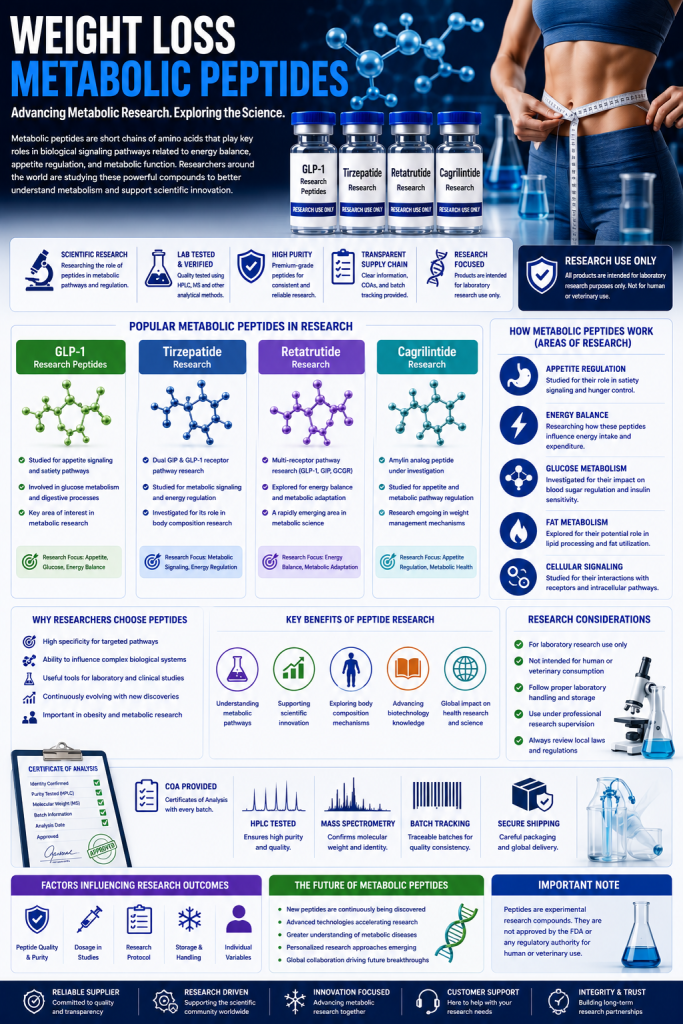
Metabolic peptides are short chains of amino acids involved in signaling pathways that regulate energy balance, nutrient utilization, and metabolic processes.
Researchers study these peptides because they can influence biological systems related to:
- Energy regulation
- Cellular signaling
- Appetite pathways
- Glucose metabolism
- Nutrient processing
Their targeted activity makes them valuable tools for investigating complex metabolic mechanisms.
Why Researchers Study Metabolic Pathways
Metabolism affects nearly every biological process within the body. Understanding metabolic regulation can help researchers gain insights into:
- Energy expenditure
- Cellular efficiency
- Hormonal communication
- Nutrient utilization
- Body composition changes
Peptides provide researchers with highly specific ways to explore these pathways.
Popular Metabolic Peptides in Research
GLP-1 Research Peptides
GLP-1 (Glucagon-Like Peptide-1) is among the most widely studied metabolic peptides today.
Researchers investigate GLP-1-related pathways because of their involvement in:
- Appetite signaling
- Energy regulation
- Glucose metabolism
- Digestive processes
GLP-1 research continues to be a major focus within biotechnology and metabolic science.
You may also find our article on popular peptides for anti-aging research useful for understanding broader peptide applications.
Tirzepatide Research
Tirzepatide has become one of the most discussed metabolic research compounds in recent years.
Scientific interest focuses on:
- Metabolic signaling pathways
- Energy regulation mechanisms
- Cellular communication systems
- Biological adaptation studies
Researchers continue exploring its interactions with multiple signaling pathways involved in metabolism.
Retatrutide Research
Retatrutide is a newer peptide attracting significant attention in metabolic studies.
Current research focuses on:
- Energy balance pathways
- Appetite-related signaling
- Metabolic adaptation processes
- Complex cellular interactions
Its multi-target approach has made it a major topic in biotechnology research.
Cagrilintide Research
Cagrilintide is another peptide frequently discussed in metabolic science.
Researchers study it for:
- Appetite-related signaling mechanisms
- Cellular response systems
- Metabolic pathway analysis
- Energy regulation studies
Interest in this peptide continues to grow as metabolic research advances.
Why Metabolic Peptides Are Gaining Popularity
Increased Focus on Obesity Research
Obesity research remains a major global priority.
Scientists are seeking better understanding of:
- Energy storage mechanisms
- Nutrient processing systems
- Appetite regulation pathways
- Metabolic efficiency
Peptides offer researchers powerful tools for studying these biological processes.
Advances in Biotechnology
Modern biotechnology has significantly improved peptide research capabilities.
Researchers now benefit from:
- Advanced analytical tools
- Artificial intelligence modeling
- Improved peptide synthesis
- Better laboratory testing systems
These advancements are accelerating scientific discoveries.
Expanding Scientific Literature
The number of published studies involving metabolic peptides continues to increase.
Research institutions worldwide are investing heavily in:
- Metabolic biology
- Cellular signaling
- Energy regulation science
- Molecular research
This growing body of knowledge continues to drive interest in metabolic peptides.
How Researchers Evaluate Metabolic Peptides
Laboratory Testing and Verification
Researchers prioritize peptides that have undergone rigorous testing.
Important verification methods include:
- High-Performance Liquid Chromatography (HPLC)
- Mass Spectrometry (MS)
- Purity verification
- Batch consistency testing
Learn more about COA tested peptides and why laboratory verification matters.
Product Transparency
Transparent suppliers often provide:
- Certificates of Analysis
- Purity reports
- Batch information
- Storage recommendations
Supplier transparency helps researchers evaluate product quality more effectively.
Read our guide on supplier transparency in the peptide industry for additional insights.
Challenges in Metabolic Peptide Research
Complexity of Metabolic Systems
Metabolism involves numerous interconnected biological pathways.
Researchers continue working to better understand:
- Hormonal signaling networks
- Energy regulation systems
- Cellular adaptation mechanisms
- Nutrient utilization processes
The complexity of these systems requires advanced research methods.
Need for Standardized Research Protocols
As peptide research expands globally, standardization is becoming increasingly important.
Researchers aim to improve:
- Data consistency
- Experimental reproducibility
- Quality control procedures
- Analytical testing standards
Standardization helps strengthen scientific reliability.
Technology Driving Metabolic Peptide Innovation
Artificial Intelligence in Peptide Research
AI tools are helping researchers:
- Analyze biological data
- Predict peptide interactions
- Improve experimental design
- Identify new research opportunities
Artificial intelligence is expected to play an even larger role in future peptide development.
Advanced Peptide Manufacturing
Modern peptide synthesis technologies support:
- Higher purity levels
- Greater batch consistency
- Improved sequence accuracy
- Enhanced quality control
These improvements benefit both researchers and suppliers.
The Future of Weight Loss Metabolic Peptide Research
Continued Investment in Biotechnology
Research organizations continue investing heavily in metabolic science due to growing interest in energy regulation and biological efficiency.
This investment is expected to support:
- New peptide discoveries
- Advanced laboratory studies
- Improved analytical technologies
- Expanded scientific collaboration
Growing Demand for Research Transparency
Researchers increasingly expect suppliers to provide:
- Verified laboratory testing
- Transparent documentation
- Quality control reports
- Educational scientific resources
Transparency is becoming a key factor in supplier selection.
Expansion of Global Research Markets
Metabolic peptide research is expanding across:
- North America
- Europe
- Asia-Pacific
- Emerging biotechnology markets
This global growth is accelerating innovation throughout the industry.
Why Metabolic Peptides Matter in Modern Research
Metabolic peptides represent one of the most exciting areas of modern biotechnology. Their ability to interact with highly specific biological pathways makes them valuable tools for studying energy regulation, metabolism, and cellular communication.
As scientific understanding continues to advance, metabolic peptides are expected to remain at the forefront of biotechnology research and innovation.
Frequently Asked Questions (FAQ)
What are metabolic peptides?
Metabolic peptides are amino acid chains studied for their involvement in energy regulation, metabolism, and cellular signaling pathways.
Which metabolic peptides are most commonly researched?
Popular research peptides include GLP-1-related compounds, Tirzepatide, Retatrutide, and Cagrilintide.
Why are metabolic peptides important in research?
Researchers use them to study energy balance, metabolic pathways, appetite signaling, and cellular communication.
How do researchers verify peptide quality?
Quality is commonly verified through HPLC testing, Mass Spectrometry, and Certificates of Analysis.
What is the future of metabolic peptide research?
The field is expected to grow significantly due to advances in biotechnology, AI-driven analysis, and expanding global research efforts.
