

Uncategorized
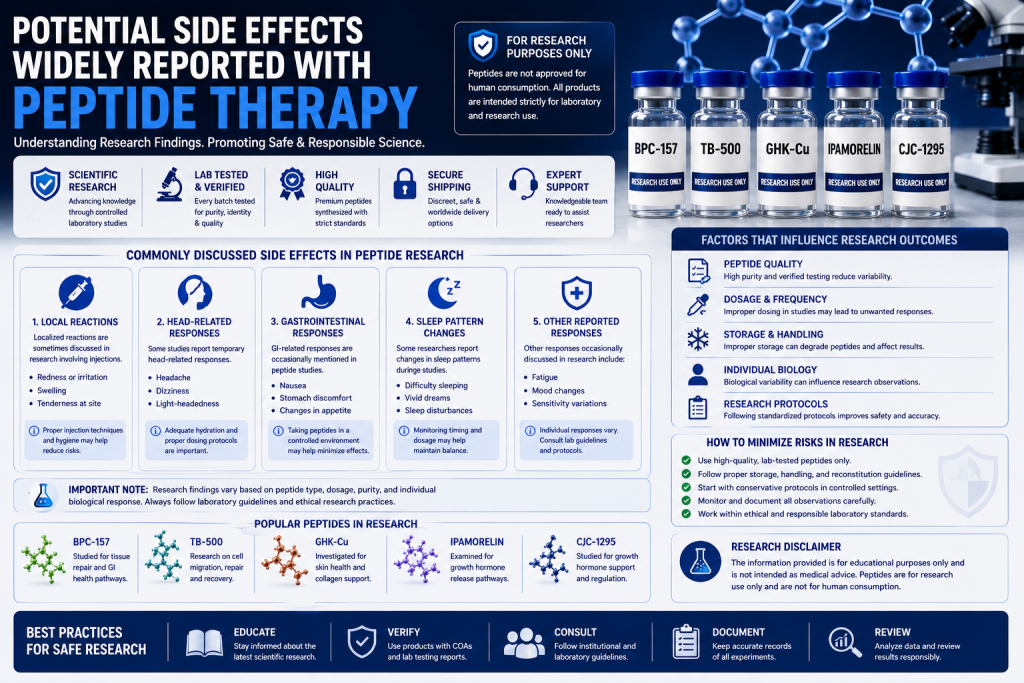
Potential Side Effects Commonly Discussed in Peptide Research and Therapy Studies
Jul
Introduction: Understanding Safety Discussions Around Peptides
Peptides continue to receive significant attention in biotechnology and scientific research due to their highly targeted biological activity and growing role in modern laboratory studies. As peptide-related research expands in 2026, discussions surrounding peptide safety, research quality, and biological response mechanisms are becoming increasingly important.
Researchers, laboratories, and biotechnology professionals often examine both the potential applications and the commonly reported concerns associated with peptide-related studies. Understanding these discussions helps researchers evaluate scientific data more carefully and encourages responsible laboratory practices.
While peptides are widely studied in controlled scientific environments, researchers frequently investigate how biological systems respond to different peptide compounds. This includes analyzing cellular reactions, tissue responses, signaling pathways, and possible unwanted biological effects observed during research.
This article explores the most commonly discussed side effects and research considerations associated with peptide studies, while highlighting the importance of quality control, transparency, and standardized research protocols.
Understanding Peptides in Scientific Research
What Are Peptides?
Peptides are short chains of amino acids that naturally occur within biological systems. In scientific research, peptides are studied because they can interact with specific cellular and molecular pathways.
Researchers commonly use peptides to investigate:
- Cellular signaling mechanisms
- Tissue response pathways
- Structural protein interactions
- Molecular communication systems
- Biological repair processes
Their precision makes peptides important tools in modern biotechnology and laboratory research.
Why Researchers Study Peptide Safety
Growing Interest in Peptide Research
As peptide science expands globally, researchers are placing greater focus on understanding how biological systems react to peptide compounds under different laboratory conditions.
Safety-related discussions often involve:
- Cellular response analysis
- Biological variability
- Research consistency
- Product purity evaluation
- Long-term research observations
These investigations help improve scientific understanding and laboratory standards.
Importance of Product Quality
One of the most important factors influencing research outcomes is peptide quality. Poor-quality or improperly handled peptides may contribute to inconsistent results and unwanted biological reactions during studies.
Researchers therefore prioritize suppliers that provide:
- High-purity products
- Transparent laboratory testing
- Certificates of Analysis (COAs)
- HPLC and Mass Spectrometry verification
You can learn more about peptide quality standards and how they influence research reliability.
Commonly Discussed Biological Responses in Peptide Studies
Localized Research Reactions
In scientific discussions, researchers sometimes report localized biological responses during peptide-related studies. These responses may vary depending on:
- Experimental conditions
- Product purity
- Handling procedures
- Environmental factors
This highlights the importance of standardized laboratory protocols and controlled research environments.
Temporary Biological Variability
Some studies discuss temporary biological variability when analyzing peptide interactions with cellular systems. Researchers continue investigating how different peptides interact with signaling pathways and tissue response mechanisms.
Variability may be influenced by:
- Peptide sequence structure
- Experimental conditions
- Cellular environment differences
- Research methodology
Tissue and Cellular Response Studies
Researchers often examine how tissues and cells respond during peptide-related investigations. These studies help scientists understand:
- Cellular adaptation mechanisms
- Structural protein interactions
- Biological repair pathways
Research in this area continues expanding alongside advances in biotechnology.
Learn more about muscle recovery peptide research and related scientific developments.
Factors That Influence Research Outcomes
Product Purity and Laboratory Testing
Purity remains one of the most critical factors in peptide research. High-quality peptides help reduce variability and improve consistency in scientific studies.
Researchers commonly rely on:
- High-Performance Liquid Chromatography (HPLC)
- Mass Spectrometry (MS)
- Batch verification systems
These methods help confirm product integrity and support accurate experimental outcomes.
You may also find our article on buying legitimate peptide products online useful when evaluating suppliers.
Storage and Handling Procedures
Improper storage conditions can affect peptide stability and influence research results.
Researchers generally focus on:
- Temperature stability
- Moisture protection
- Proper packaging systems
- Controlled laboratory handling
Correct handling procedures help maintain peptide integrity throughout research processes.
Read more about peptide storage guidelines and laboratory best practices.
Research Methodology
Different research methods can produce different biological observations. Standardized protocols are essential for improving reproducibility across laboratories.
Scientific teams continue working toward improved consistency in:
- Experimental setup
- Documentation standards
- Data analysis methods
- Laboratory procedures
Why Transparency Matters in Peptide Research
Importance of Verified Suppliers
Researchers increasingly prefer suppliers that provide transparent testing and quality verification.
Highly rated suppliers often offer:
- Certificates of Analysis
- Verified purity reports
- Batch tracking systems
- Clear product information
Transparency helps build confidence within the scientific community.
See our overview of top-rated peptide suppliers for additional insights.
Educational Resources and Scientific Awareness
Many researchers now rely on educational content to better understand peptide science and laboratory procedures.
Trusted suppliers often provide:
- Research articles
- Scientific blog content
- Laboratory handling guides
- Quality control information
Educational transparency helps support responsible research practices.
Advances Improving Peptide Research Safety
Artificial Intelligence and Data Analysis
Artificial intelligence is increasingly used to analyze peptide interactions and improve research design.
AI systems help researchers:
- Identify biological patterns
- Reduce experimental variability
- Improve data interpretation
- Optimize laboratory workflows
Improved Peptide Manufacturing Standards
Modern synthesis technologies now allow for:
- Higher purity levels
- More accurate sequence production
- Better batch consistency
- Improved quality control systems
These advancements support safer and more reliable scientific research.
Challenges in Peptide Research
Variability Between Suppliers
Not all suppliers follow the same manufacturing or testing standards. This can lead to differences in peptide quality and research outcomes.
Researchers therefore place strong emphasis on supplier reputation and testing transparency.
Need for Standardized Global Practices
As peptide research expands worldwide, scientists continue working toward unified standards for:
- Quality verification
- Laboratory procedures
- Documentation practices
- Research transparency
Standardization is expected to improve consistency across the industry.
The Future of Peptide Research and Safety
Greater Focus on Research Integrity
Future peptide research will likely place even greater emphasis on:
- Quality control
- Transparent testing
- Ethical laboratory practices
- Data reproducibility
These factors will help strengthen scientific reliability.
Continued Growth in Biotechnology
Peptides are expected to remain important tools in biotechnology, molecular biology, and cellular research.
As technology advances, researchers will continue developing safer and more precise research methods.
Frequently Asked Questions (FAQ)
Why is peptide purity important in research?
High-purity peptides help improve consistency and reduce variability in scientific experiments.
What factors influence peptide research outcomes?
Research conditions, product quality, storage methods, and laboratory protocols can all influence results.
Why do researchers emphasize laboratory testing?
Testing methods such as HPLC and mass spectrometry help verify peptide quality and integrity.
How can researchers identify reliable peptide suppliers?
Researchers often review transparency, analytical testing data, and customer feedback when evaluating suppliers.
What role does AI play in peptide research?
AI helps researchers analyze data, improve research design, and reduce variability in laboratory studies.
