

Uncategorized
Where Can You Buy Legitimate Peptide Products Online? A Complete Guide for Researchers in 2026
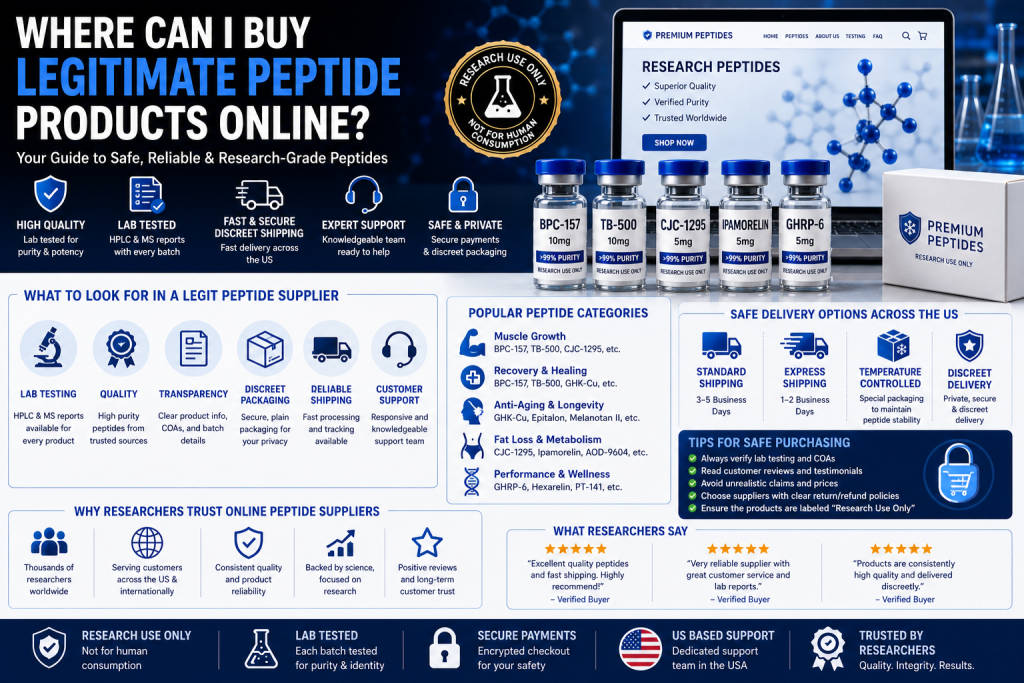
Jul
Introduction: The Growing Demand for Legitimate Peptide Suppliers
The online peptide market has expanded rapidly in recent years as scientific research continues to grow worldwide. Researchers, biotechnology companies, and laboratory professionals are increasingly searching for reliable sources of high-quality research peptides online.
However, with the rise in demand comes a major challenge: identifying legitimate peptide suppliers. In 2026, the market includes thousands of online vendors, making it difficult for researchers to distinguish between trustworthy suppliers and unreliable sources.
Legitimate peptide suppliers are defined by their commitment to quality control, transparency, professional service, and verified laboratory standards. Researchers now pay close attention to product testing, shipping reliability, customer reviews, and supplier reputation before making purchasing decisions.
This article explores how to identify legitimate peptide products online, what researchers should look for in a supplier, and the latest trends shaping the online peptide industry.
Understanding Legitimate Peptide Products
What Are Research Peptides?
Research peptides are short chains of amino acids used in scientific studies involving molecular biology, biotechnology, biochemical analysis, and cellular research.
These products are typically labeled for:
- Laboratory research
- Analytical testing
- Scientific investigation
Legitimate peptide products are intended strictly for controlled research environments.
Why Product Legitimacy Matters
Purchasing peptides from unreliable suppliers can create major problems for researchers, including:
- Inconsistent experimental results
- Low product purity
- Poor packaging and storage conditions
- Shipping delays or missing orders
- Lack of analytical verification
Choosing legitimate suppliers helps ensure reliable and reproducible research outcomes.
Key Features of Legitimate Online Peptide Suppliers
Transparent Laboratory Testing
One of the most important signs of a legitimate supplier is transparency in product testing.
Trusted peptide companies often provide:
- Certificates of Analysis (COA)
- High-Performance Liquid Chromatography (HPLC) reports
- Mass Spectrometry (MS) data
- Batch verification information
These documents help confirm product purity and consistency.
Professional Website and Product Information
Reliable peptide suppliers usually maintain professional websites with clear product details and educational information.
Researchers should look for:
- Detailed product descriptions
- Purity information
- Storage recommendations
- Clear policies and contact information
Well-organized websites often indicate a more professional operation.
Positive Customer Reviews
User reviews play an important role in evaluating peptide suppliers. Researchers frequently check feedback related to:
- Product quality
- Shipping reliability
- Customer support
- Packaging standards
- Order accuracy
Suppliers with consistent positive reviews are generally viewed as more trustworthy.
Secure Packaging and Deliver Legitimate peptide companies invest in secure packaging systems to protect product integrity during shipping.
Important features include:
- Sealed packaging
- Temperature protection
- Discreet delivery options
- Shipment tracking systems
Reliable shipping practices help maintain peptide quality.
Where Researchers Commonly Buy Peptides Online
Specialized Research Peptide Websites
Many researchers purchase peptides from companies that focus specifically on research compounds.
These suppliers often offer:
- Large peptide catalogues
- Laboratory-focused customer support
- Analytical testing transparency
- Research educational resources
Biotechnology Supply Companies
Some biotechnology suppliers include peptides as part of larger research product catalogues. These companies may provide additional laboratory tools and materials.
International Peptide Suppliers
Global peptide manufacturers are increasingly serving US and European research markets through online ordering systems and international shipping networks.
How to Identify Trustworthy Peptide Suppliers
Review Testing Standards
Legitimate suppliers typically provide laboratory verification data for their products. Researchers should prioritize companies that openly share testing information.
Evaluate Communication and Support
Professional customer service is another strong indicator of legitimacy. Reliable suppliers respond clearly and promptly to customer questions.
Compare Transparency Between Suppliers
Trustworthy suppliers are open about:
- Product sourcing
- Manufacturing practices
- Shipping procedures
- Quality control systems
Transparency helps build long-term trust.
Look for Consistency in Reviews
A large number of consistent positive reviews often indicates a reliable supplier with stable product quality and service.
Common Red Flags When Buying Peptides Online
Lack of Laboratory Testing Information
Suppliers that do not provide analytical testing data may not meet professional research standards.
Unrealistic Claims
Researchers should avoid companies making exaggerated or unsupported claims about peptide products.
Poor Website Quality
Unclear product descriptions, missing contact information, and unprofessional website design may indicate an unreliable supplier.
Limited Customer Support
Difficulty reaching customer service or receiving clear answers is often considered a warning sign.
Trends Shaping the Online Peptide Industry in 2026
Higher Demand for Verified Quality
Researchers are placing greater emphasis on verified purity and analytical testing than ever before.
Growth of Educational Content
Leading peptide suppliers now provide:
- Scientific blog articles
- Research guides
- Product handling information
- Market trend updates
Educational content helps establish authority and trust.
Faster Shipping Expectations
Modern researchers expect:
- Fast order processing
- Reliable tracking systems
- Improved packaging standards
- Efficient international shipping
Suppliers that meet these expectations gain competitive advantages.
Why Quality and Transparency Matter in Research
Reliable peptide products are essential for accurate and reproducible scientific studies. High-quality peptides reduce variability and improve confidence in research outcomes.
Researchers who carefully evaluate suppliers based on testing standards, transparency, and customer feedback are more likely to achieve consistent experimental success.
The Future of Online Peptide Purchasing
Improved Industry Standards
As the market matures, researchers are demanding better quality control, more transparency, and stronger customer service from suppliers.
Expansion of Global Peptide Markets
International peptide suppliers will continue expanding into the US and European markets, increasing competition and improving overall service quality.
Greater Use of Technology
Modern peptide suppliers are increasingly using digital systems for:
- Inventory tracking
- Customer communication
- Shipment monitoring
- Quality verification
Technology is helping improve efficiency and customer trust.
Frequently Asked Questions (FAQ)
Where can researchers buy legitimate peptide products online?
Researchers often purchase from specialized peptide suppliers and biotechnology companies that provide transparent testing and reliable service.
How can peptide quality be verified?
Quality is commonly verified through HPLC reports, mass spectrometry data, and Certificates of Analysis.
Why are customer reviews important?
Reviews provide insight into product quality, shipping reliability, and customer service performance.
What should researchers avoid when buying peptides online?
Researchers should avoid suppliers with poor transparency, unrealistic claims, or limited testing information.
Why is secure packaging important?
Proper packaging helps maintain peptide stability and protects products during shipping.
