

Uncategorized
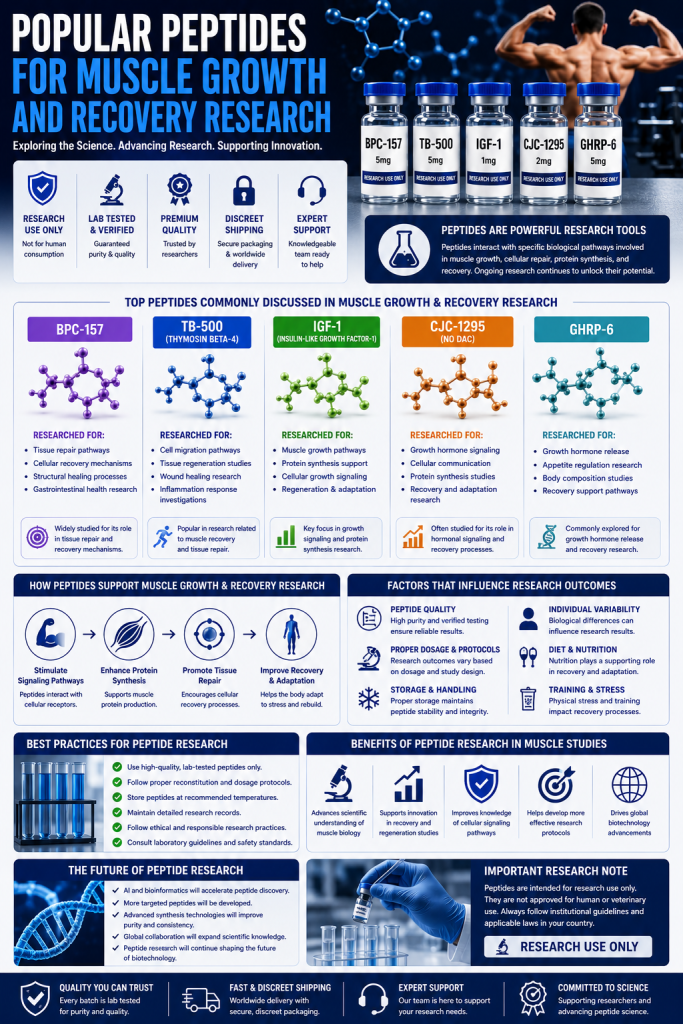
Popular Peptides Commonly Discussed for Muscle Growth and Recovery Research
Jul
Introduction: Why Muscle Growth Peptide Research Is Expanding
Muscle growth and recovery remain two of the most researched topics in modern biotechnology and peptide science. In 2026, researchers continue exploring how peptides interact with biological systems involved in tissue response, cellular repair, protein synthesis, and structural adaptation.
Peptides have become increasingly important in laboratory research because of their targeted biological activity and ability to help scientists study complex molecular pathways. Research institutions, biotechnology companies, and scientific laboratories worldwide are investing heavily in peptide-related studies focused on muscle biology and recovery mechanisms.
As interest grows, several peptide compounds are frequently discussed in scientific literature and research communities for their association with muscle-related biological processes. These compounds are commonly studied in controlled laboratory environments to better understand how muscle tissues respond to stress, repair, and adaptation.
This article explores some of the most popular peptides discussed in muscle growth and recovery research, how researchers study them, and why they continue gaining attention across the scientific community.
Understanding Peptides in Muscle Research
What Are Peptides?
Peptides are short chains of amino acids that naturally occur in biological systems. In scientific research, peptides are studied because they can interact with specific cellular signaling pathways and biological processes.
Researchers commonly investigate peptides for their role in:
- Cellular communication
- Protein interaction studies
- Tissue response mechanisms
- Structural adaptation pathways
- Molecular signaling systems
Their precision and flexibility make them valuable tools in modern biotechnology research.
Why Peptides Are Important in Muscle Studies
Muscle growth and recovery involve highly complex biological systems. Researchers use peptides to better understand how muscles respond to:
- Physical stress
- Cellular damage
- Recovery processes
- Protein synthesis activity
- Structural adaptation
Peptides help researchers isolate and analyze specific biological pathways within these systems.
Popular Peptides Discussed in Muscle Growth Research
BPC-157
BPC-157 is one of the most commonly discussed peptides in muscle and tissue-related research.
Researchers study BPC-157 for its potential involvement in:
- Tissue response mechanisms
- Cellular repair pathways
- Structural recovery studies
- Biological adaptation processes
Its growing popularity comes from ongoing scientific interest in recovery-related research.
You can also explore our guide on muscle recovery peptide research for more information.
TB-500 (Thymosin Beta-4)
TB-500 is another peptide frequently mentioned in muscle recovery and tissue research discussions.
Scientific studies commonly focus on:
- Cellular migration pathways
- Tissue structure organization
- Recovery-related signaling mechanisms
- Biological repair responses
Researchers continue exploring how TB-500 interacts with cellular systems during recovery-focused studies.
IGF-1 (Insulin-Like Growth Factor-1)
IGF-1 remains one of the most recognized compounds in growth-related biological research.
Research areas involving IGF-1 often include:
- Protein synthesis studies
- Cellular growth signaling
- Structural adaptation pathways
- Muscle development mechanisms
Its importance in molecular biology continues driving scientific interest worldwide.
CJC-1295
CJC-1295 is commonly discussed in peptide research involving biological signaling systems connected to growth processes.
Researchers study it for:
- Cellular communication analysis
- Hormonal signaling pathways
- Growth-related biological responses
- Molecular regulation systems
GHRP-6
GHRP-6 is another peptide frequently mentioned in muscle-related scientific discussions.
Research interest often focuses on:
- Biological signaling interactions
- Cellular response studies
- Growth pathway analysis
- Molecular communication systems
Why These Peptides Are Popular in Research
Precision in Biological Studies
One of the main reasons peptides are widely researched is their ability to interact with highly specific biological targets.
This allows researchers to:
- Analyze complex systems more accurately
- Reduce experimental variability
- Study isolated molecular pathways
- Improve research precision
Compatibility With Modern Biotechnology
Peptides work well with advanced laboratory technologies including:
- Artificial intelligence systems
- Molecular analysis tools
- Automated laboratory platforms
- Biotechnology research software
This compatibility supports rapid growth in peptide-related science.
Expanding Scientific Literature
Research publications discussing peptides continue increasing each year. More universities, biotechnology companies, and laboratories are contributing to peptide studies involving muscle biology and recovery.
Muscle Recovery Research and Peptides
Understanding Recovery Mechanisms
Muscle recovery is a highly complex process involving multiple biological systems.
Researchers investigate:
- Cellular repair pathways
- Tissue adaptation mechanisms
- Protein synthesis activity
- Structural recovery processes
Peptides help scientists better understand these biological interactions
Tissue Response Studies
Several peptides are studied specifically for how tissues respond during recovery-related research.
Scientific interest includes:
- Cellular movement pathways
- Structural protein interactions
- Biological organization systems
- Recovery signaling mechanisms
This area remains one of the fastest-growing sectors in peptide research.
Importance of Quality in Peptide Research
High-Purity Peptides and Research Accuracy
Researchers place strong emphasis on peptide purity because high-quality compounds help improve consistency and reliability in scientific studies.
Trusted suppliers often provide:
- Certificates of Analysis (COAs)
- HPLC testing reports
- Mass Spectrometry verification
- Batch tracking information
Learn more about peptide quality standards and research transparency.
Proper Storage and Laboratory Handling
Correct storage procedures help maintain peptide stability during research.
Laboratories commonly focus on:
- Temperature control
- Moisture protection
- Secure packaging systems
- Standardized handling procedures
These practices help preserve research integrity.
Challenges in Muscle Peptide Research
Complexity of Biological Systems
Muscle development and recovery involve many interconnected biological pathways. Researchers continue working to better understand these systems through advanced peptide studies.
Need for Standardized Research Methods
Scientific teams worldwide are working toward improved standardization in:
- Laboratory protocols
- Data collection methods
- Testing procedures
- Quality verification systems
Standardization helps improve reproducibility across studies.
Technology Driving Peptide Innovation
Artificial Intelligence in Peptide Science
AI systems are increasingly used to analyze peptide behavior and optimize research design.
Researchers use AI to:
- Predict peptide interactions
- Improve laboratory efficiency
- Analyze biological patterns
- Reduce variability in studies
Improved Peptide Manufacturing
Modern synthesis technologies now support:
- Higher purity levels
- Better sequence accuracy
- Improved batch consistency
- Enhanced laboratory reliability
These advancements continue driving growth in peptide research.
The Future of Muscle Growth Peptide Research
Continued Growth in Biotechnology
Biotechnology companies and research institutions are expected to continue investing heavily in muscle-related peptide studies.
This growth is fueled by:
- Expanding scientific interest
- Better laboratory technologies
- Increased global collaboration
- Improved analytical systems
Rising Demand for Research Transparency
Researchers increasingly prioritize suppliers that provide:
- Verified testing documentation
- Transparent quality control systems
- Educational scientific resources
- Reliable customer support
Transparency is becoming one of the most important factors in the peptide industry.
Frequently Asked Questions (FAQ)
What are peptides commonly studied for in muscle research?
Researchers study peptides for muscle biology, tissue response, protein synthesis, and recovery-related pathways.
Which peptides are most commonly discussed?
Popular research peptides include BPC-157, TB-500, IGF-1, CJC-1295, and GHRP-6.
Why is peptide purity important?
High-purity peptides help improve research accuracy and experimental consistency.
What technologies support peptide research?
Artificial intelligence, molecular analysis systems, and advanced synthesis technologies all support modern peptide science.
Why is muscle recovery research growing?
Researchers continue exploring how biological systems respond to stress, adaptation, and tissue recovery processes.
