

Uncategorized
COA Tested Peptides: Why Certificate of Analysis Matters in Modern Peptide Research
Jul
Introduction: The Growing Importance of COA Tested Peptides
As peptide research continues to grow worldwide, researchers are placing greater emphasis on quality control, product verification, and laboratory transparency. In 2026, one of the most important factors influencing purchasing decisions in the peptide industry is whether products are COA tested.
A Certificate of Analysis (COA) has become a critical document for researchers, laboratories, and biotechnology companies seeking reliable peptide products. COA tested peptides help support research accuracy by providing verified information about product quality, purity, and batch consistency.
With the increasing number of peptide suppliers entering the market, researchers are becoming more selective about the products they purchase. High-quality peptides backed by laboratory testing and transparent documentation are now considered essential for maintaining scientific reliability.
This article explores what COA tested peptides are, why Certificates of Analysis matter in peptide research, and how verified testing helps improve laboratory confidence and research consistency.
What Are COA Tested Peptides?
Understanding Certificates of Analysis
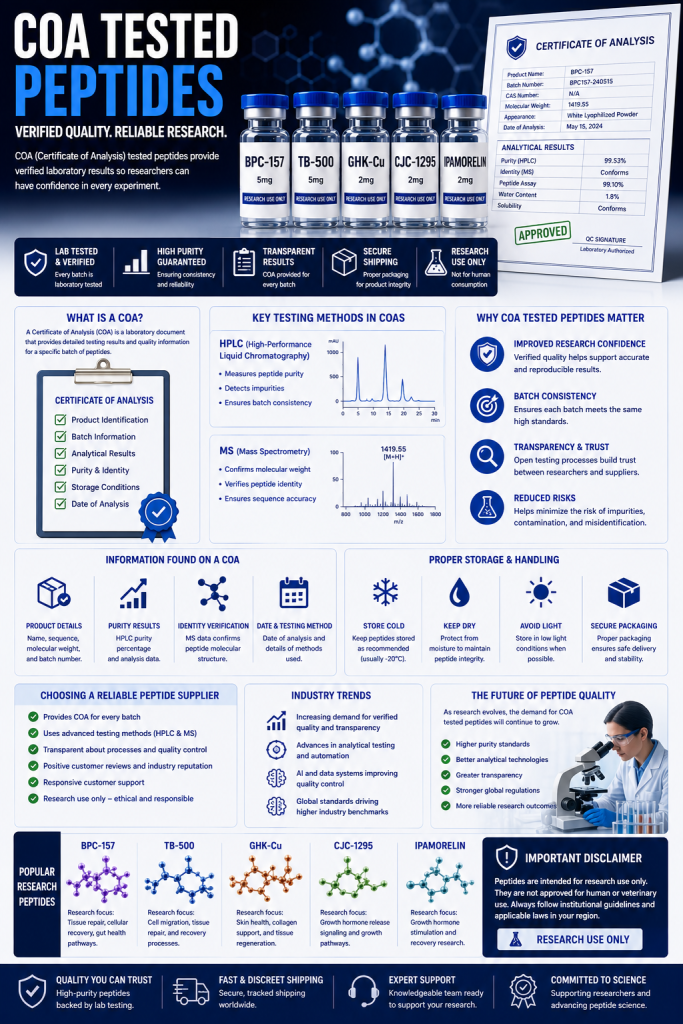
A Certificate of Analysis, commonly known as a COA, is a laboratory document that provides detailed testing information about a peptide product.
A COA may include information such as:
- Product identity
- Batch number
- Purity percentage
- Analytical testing results
- Storage recommendations
- Manufacturing details
This documentation helps researchers confirm that the peptide product matches the expected laboratory standards.
Why COAs Are Important in Research
Peptide research depends heavily on consistency and accuracy. Even small variations in product quality can affect experimental outcomes.
COA tested peptides help researchers:
- Verify product purity
- Confirm batch consistency
- Improve research reliability
- Reduce experimental variability
- Support reproducible scientific studies
Because of these benefits, Certificates of Analysis are becoming standard expectations across the peptide industry.
Key Testing Methods Found in COAs
High-Performance Liquid Chromatography (HPLC)
HPLC is one of the most common analytical techniques used in peptide testing.
Researchers use HPLC to:
- Measure peptide purity
- Detect impurities
- Verify consistency between batches
High-purity peptides are generally preferred because they help improve research accuracy.
You can learn more about peptide quality standards and laboratory verification practices.
Mass Spectrometry (MS)
Mass Spectrometry is another important testing method commonly included in COAs.
This method helps researchers:
- Confirm molecular structure
- Verify peptide identity
- Analyze sequence accuracy
Mass Spectrometry plays a major role in modern peptide quality control.
Batch Verification Testing
Batch verification helps ensure consistency between production runs.
Researchers often review batch information to confirm:
- Stable product quality
- Reliable synthesis processes
- Reproducible laboratory performance
Consistency is especially important for long-term research projects.
Why Researchers Prefer COA Tested Peptides
Improved Research Confidence
COA tested peptides provide researchers with greater confidence in the products they use.
Verified testing helps support:
- Reliable experimental results
- Better data reproducibility
- Increased laboratory transparency
- Improved scientific integrity
Researchers increasingly avoid suppliers that do not provide proper analytical documentation.
Better Supplier Transparency
Suppliers that openly provide COAs demonstrate a stronger commitment to quality control and professional research standards.
Trusted peptide suppliers often share:
- Laboratory testing reports
- Batch tracking systems
- Purity verification data
- Product handling recommendations
Transparency is becoming one of the most important factors in the modern peptide market.
See our guide on top-rated peptide suppliers for additional insights.
Reduced Risk of Low-Quality Products
Without proper testing documentation, researchers may struggle to verify product quality and consistency.
COA tested peptides help reduce concerns related to:
- Product contamination
- Incorrect peptide sequences
- Low purity levels
- Inconsistent batches
Verified testing helps improve overall research reliability.
Common Information Found on a COA
Product Identification Details
Most Certificates of Analysis include:
- Product name
- Peptide sequence
- Batch number
- Manufacturing reference information
This helps researchers accurately track research materials.
Purity Information
Purity percentages are among the most important details researchers examine on a COA.
Higher purity levels generally support:
- More accurate experiments
- Reduced variability
- Improved consistency
Testing Methodology
Professional COAs usually describe the analytical methods used during testing, such as:
- HPLC analysis
- Mass Spectrometry verification
- Stability testing procedures
Understanding testing methods helps researchers evaluate product reliability.
Importance of Proper Storage and Handling
Storage Conditions Matter
Even high-quality peptides can degrade if stored improperly.
Researchers typically focus on:
- Temperature control
- Moisture protection
- Light exposure reduction
- Stable storage environments
Proper handling helps maintain peptide integrity after testing.
Read more about peptide storage guidelines and laboratory handling best practices.
Packaging and Shipping Standards
Professional suppliers often use secure packaging systems to help protect product stability during shipping.
Common packaging features include:
- Sealed containers
- Temperature-sensitive protection
- Moisture barriers
- Batch labeling systems
Reliable shipping practices help preserve product quality.
Challenges in the Peptide Industry
Inconsistent Testing Standards
Not all peptide suppliers follow the same quality control procedures.
Researchers may encounter differences in:
- Testing accuracy
- Documentation transparency
- Manufacturing consistency
- Analytical standards
This is why many researchers prioritize suppliers with strong reputations and verified laboratory testing.
Market Saturation and Supplier Selection
The growing peptide market has made supplier evaluation more important than ever.
Researchers now commonly review:
- Customer feedback
- Laboratory testing documentation
- Product transparency
- Shipping reliability
before making purchasing decisions.
Technology Advancing Peptide Quality Control
Automated Laboratory Analysis
Modern analytical systems help improve:
- Testing precision
- Batch verification accuracy
- Quality control consistency
Automation continues improving peptide manufacturing standards worldwide.
Artificial Intelligence and Data Analysis
AI tools are increasingly used in peptide manufacturing and testing processes.
These technologies help:
- Detect production inconsistencies
- Analyze purity data
- Improve quality assurance systems
AI-supported quality control is expected to become even more common in the future.
The Future of COA Tested Peptides
Higher Expectations From Researchers
Researchers are demanding greater transparency and stronger verification systems from peptide suppliers.
Future industry standards will likely place even greater emphasis on:
- Verified purity testing
- Transparent documentation
- Consistent batch quality
- Reliable laboratory procedures
Growth of Global Quality Standards
As peptide research expands internationally, global standardization efforts are expected to improve consistency across suppliers and laboratories.
This will help strengthen trust within the scientific community.
Why COA Tested Peptides Matter for Research Success
Reliable peptide quality is essential for accurate and reproducible scientific studies. COA tested peptides provide researchers with important verification data that supports confidence in laboratory outcomes.
Researchers who prioritize transparent testing and high-quality products are more likely to achieve consistent and reliable research results.
Frequently Asked Questions (FAQ)
What does COA mean in peptide research?
COA stands for Certificate of Analysis, a document showing laboratory testing results and product verification information.
Why are COA tested peptides important?
They help researchers verify purity, batch consistency, and product quality for reliable scientific studies.
What testing methods are commonly used in COAs?
HPLC and Mass Spectrometry are among the most common analytical testing methods.
Why is peptide purity important?
High-purity peptides help reduce variability and improve research accuracy.
What should researchers look for in a peptide COA?
Researchers typically review purity levels, testing methods, batch numbers, and verification data.
